

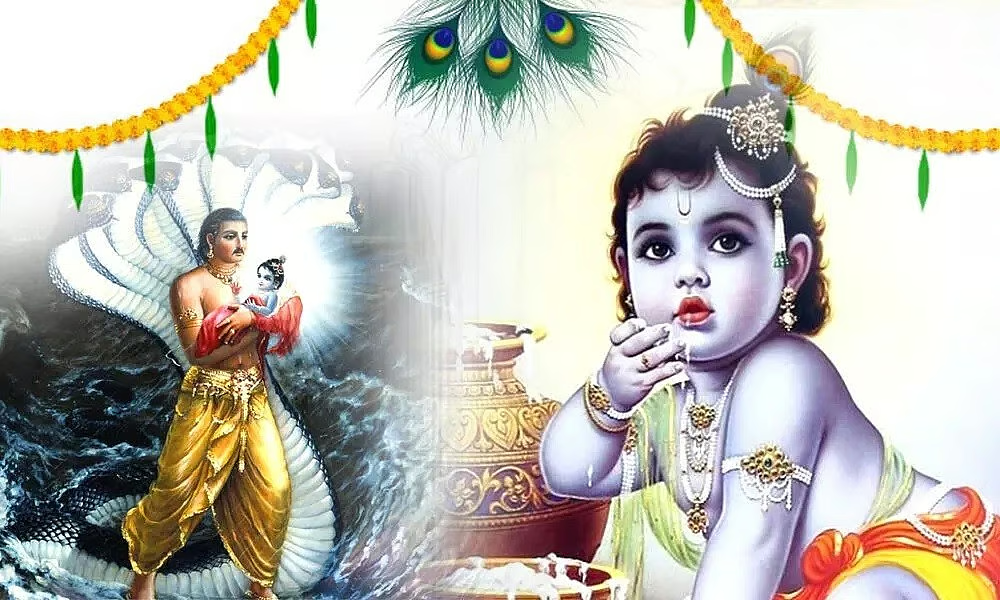
Janmashtami, the sacred celebration of Lord Krishna’s divine appearance on Earth, is one of the most widely celebrated and spiritually significant festivals in India. It marks not just a historical event, but an eternal truth — the descent of the Divine into the material world to protect dharma, uplift souls, and perform His enchanting pastimes.
Every ritual performed on this day holds layers of symbolism, devotion, and spiritual depth. Let’s explore the top 10 Janmashtami rituals and uncover their profound meanings — so you don’t just celebrate the festival, you live it.
1. Fasting – Purification of the Body, Focus of the Soul
Fasting (upavasa) on Janmashtami is a heartfelt offering of devotion. Devotees abstain from grains, lentils, and sometimes even water, maintaining a simple diet of fruits, milk, and nuts. This fast lasts until midnight — the sacred hour of Lord Krishna’s birth.
Fasting symbolizes detachment from the physical world and discipline of the senses, helping the devotee focus inward. It reminds us that spiritual nourishment is more essential than material food. By curbing bodily urges, the mind becomes calm and focused, preparing the heart for Krishna’s divine appearance.
2. Abhishek – A Sacred Bath to Cleanse the Soul
Abhishek, or ritual bathing of the deity, is one of the most beautiful and symbolic Janmashtami rituals. Krishna’s murti is bathed with sacred substances like milk, yogurt, honey, ghee, sugar water, and rose water. Each item used represents purity, sweetness, and devotion.
But more than a ceremonial act, abhishek represents cleansing the heart. As we bathe the deity, we symbolically wash away impurities from our inner self, praying that the Lord may enter our cleansed heart. The act of offering pure substances is an expression of love and surrender, where the devotee becomes the servant of the Lord (sevak), offering everything with humility.
3. Jhulan Yatra – Swinging the Divine Child in Joyful Devotion
During Janmashtami, devotees place a small deity or image of baby Krishna in a decorated swing (jhula) and gently rock Him while singing lullabies and bhajans. Known as Jhulan Yatra, this ritual is especially observed during the days leading up to Janmashtami.
Swinging the Lord is an act of vatsalya bhava (parental affection), expressing love and care for Krishna as a divine child. It also reflects the joyful mood of Vrindavan, where Krishna’s childhood was filled with playful mischief and unconditional love. Spiritually, this ritual reminds us that God is not only a cosmic power, but also someone we can have a sweet, personal relationship with.
4. Dahi Handi – Celebrating Krishna’s Mischievous Spirit
One of the most thrilling public events during Janmashtami is the Dahi Handi festival, particularly in Maharashtra and parts of North India. Inspired by Krishna’s pastime of stealing butter, youth groups form human pyramids to reach and break a clay pot filled with curd, butter, or sweets tied high in the air.
This joyful ritual symbolizes Krishna’s playful and accessible nature. It reminds us that spirituality is not always solemn — it can be fun, energetic, and full of laughter. On a deeper level, it teaches teamwork, devotion, and enthusiasm in serving God and re-enacting His lilas (divine pastimes).
5. Midnight Aarti – Welcoming the Lord in the Hour of His Descent
At the stroke of midnight, the entire spiritual atmosphere transforms. Bells ring, lamps are waved, and devotees chant Krishna’s names in temples and homes alike — this is the sacred Midnight Aarti, the very moment of Krishna’s divine birth.
This aarti symbolizes the victory of light over darkness, both literally and metaphorically. It celebrates the Lord entering the world at its darkest hour to remove suffering and restore dharma. It also reflects the birth of God within our hearts — as the aarti light circles the deity, it represents the light of devotion circling around the soul.
6. Jhanki Darshan – Visual Meditation on Krishna’s Divine Leelas
Temples and households display Jhankis — artistic tableaus or scenes from Krishna’s life created with dolls, lights, and flowers. These depictions range from Krishna’s birth in a prison cell to His playful childhood and heroic deeds.
Jhankis help devotees visually immerse themselves in Krishna’s lilas. They act as storytelling tools, meditation aids, and teaching instruments for children and adults alike. Observing Jhankis is a way to deeply connect with Krishna’s personality and remember His divine mission.
7. Kirtan and Bhajan Singing – Merging the Soul in Divine Sound
One of the most spiritually uplifting parts of Janmashtami is the collective singing of bhajans (devotional songs) and kirtan (chanting of God’s names). Devotees chant the Hare Krishna Mahamantra and other names of the Lord with musical instruments like mridanga and kartals.
Chanting creates a powerful spiritual vibration that purifies the heart and invites the Lord’s presence. Kirtan is considered the yuga-dharma (spiritual practice of the age) and is especially powerful on Janmashtami. It transforms the environment into a divine space and fills the heart with bliss.
8. Decorating Krishna’s Cradle – A Personal Invitation to the Divine
Another beautiful home ritual is decorating a small cradle or palna for baby Krishna. Adorned with flowers, silk cloth, lights, and ornaments, the cradle becomes the centerpiece of devotion as devotees gently rock it, singing lullabies like “Nand ke anand bhayo…”
This cradle symbolizes the birth of Krishna in the devotee’s own home and heart. It reflects the bhava (emotion) of the Gopis and devotees of Vrindavan who treated Krishna as their own child. It’s an act of love and longing, showing that Krishna is always ready to appear wherever there is devotion.
9. Offering Chappan Bhog – Feeding Krishna with Love and Gratitude
Chappan Bhog, or offering 56 types of food, is a traditional way to honor Krishna’s divine appetite and generosity. Legend says Krishna didn’t eat for seven days while holding Govardhan Hill, so devotees offer 8 meals × 7 days = 56 items to compensate.
Every item is prepared with care, devotion, and purity. This grand feast reflects gratitude, abundance, and surrender. It reminds us that all nourishment ultimately comes from God and should be offered back to Him before we enjoy it. After the offering, the food becomes prasadam — sanctified and spiritually nourishing.
10. Scriptural Readings and Krishna Katha – Feeding the Soul with Divine Wisdom
Listening to or reading Krishna’s pastimes from scriptures like the Srimad Bhagavatam or Bhagavad Gita is a central part of Janmashtami. Many temples host Krishna Katha sessions, where spiritual speakers narrate the story of Krishna’s birth, teachings, and divine lilas.
These narrations are not just stories, but powerful meditations that awaken devotion and understanding. They remind us why Krishna came — to protect the righteous, destroy evil, and enlighten the world with spiritual knowledge. Engaging in Krishna Katha purifies the mind and invites deep spiritual reflection.
