

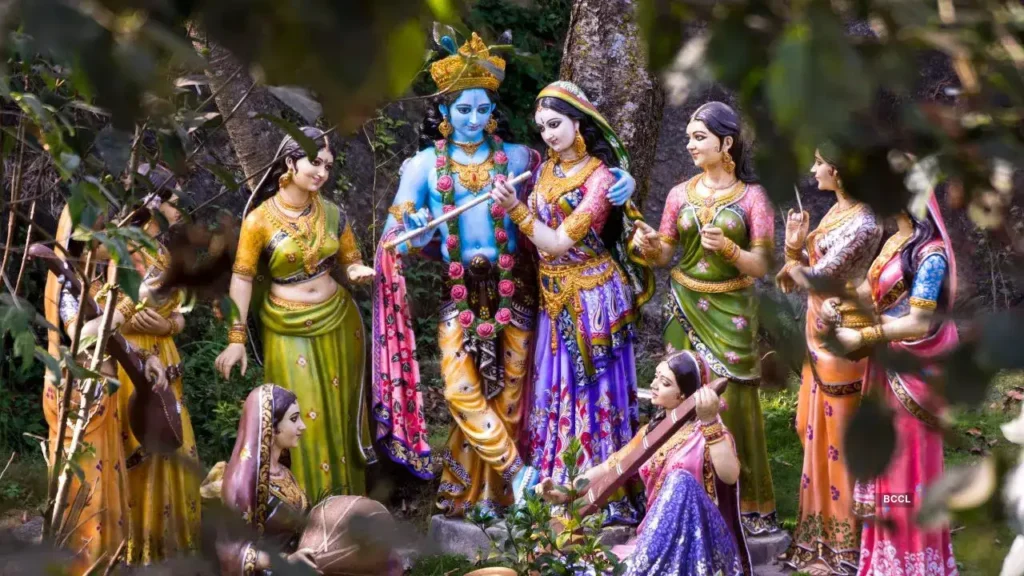
Janmashtami, the celebration of Lord Krishna’s divine birth, is a festival brimming with devotion, color, music, and joy. But beyond the celebrations lies something even more profound — the remembrance of Krishna’s lilas (divine pastimes). Each of these pastimes is a doorway into understanding Krishna’s unique personality — as a mischievous child, a loving friend, a wise teacher, and the Supreme Lord who plays with His devotees like an intimate companion.
Here are 10 beautiful Krishna pastimes you can reflect on, share with loved ones, and meditate upon this Janmashtami to feel a deeper connection with the Lord.
1. Makhan Chor Lila – The Divine Mischief of the Butter Thief
One of the most adorable and widely loved stories of Krishna is His butter-stealing pastime. In His childhood days in Gokul, Krishna would sneak into the homes of the gopis (cowherd women), break their butter pots, and share the stolen butter with monkeys and friends. Sometimes He would hang the pots high up, and climb on His friends’ backs to reach them — laughing all the while.
Despite repeated complaints to Mother Yashoda, she would be enchanted by His innocent face. Eventually, she tied Him up with a rope — which brings us to another lila!
Spiritual meaning: Krishna doesn’t need anything material from us — He steals butter as a symbol of stealing our hearts. This lila teaches that the Lord is pleased not with rituals, but with love, playfulness, and innocence.
2. Kaliya Daman – Krishna’s Dance on the Poisonous Serpent
The Yamuna River once became toxic due to the presence of the serpent Kaliya. Animals and villagers fell ill, and the waters turned black. To restore the river and protect the people, Krishna jumped into the river, battled Kaliya, and danced on his many hoods until he surrendered.
After the serpent and his wives begged forgiveness, Krishna forgave them and ordered Kaliya to leave the river forever.
Spiritual meaning: Kaliya represents pride, ego, and negativity. Krishna’s dance on his head shows how the Lord conquers poison — not just outside us, but within. He purifies what’s toxic in our lives and grants liberation when we surrender.
3. Govardhan Lila – Lifting the Hill with a Finger of Grace
When Indra, the king of the demigods, sent torrential rain to Vrindavan out of anger, Krishna lifted the massive Govardhan Hill with His little finger and held it like an umbrella for seven days and nights, protecting all the villagers and animals.
The villagers took shelter under the hill, realizing Krishna’s divine power and loving care.
Spiritual meaning: This lila is a powerful reminder that God is the ultimate protector. When we surrender to Him with faith, He shelters us even in life’s heaviest storms. The pastime also teaches us to rely on God, not just external powers.
4. Ras Leela – The Transcendental Dance of Divine Love
The Ras Leela was a divine dance Krishna performed with the gopis of Vrindavan on a full moon night. Miraculously, Krishna expanded Himself so that each gopi felt He was dancing with her alone. The Ras Leela is the highest expression of divine love (prema).
Spiritual meaning: Ras Leela teaches that Krishna is not distant — He is intimately present with each soul. The gopis’ selfless love and total surrender show us the ideal relationship between the soul and God. It is a dance of spiritual union beyond worldly emotions.
5. Damodar Lila – God Bound by a Mother’s Love
One day, after stealing butter, Krishna was caught by Mother Yashoda. As punishment, she tried to tie Him to a wooden grinding mortar. Despite His divine form being unlimited, He allowed her to tie Him — but only when she tried with full effort and love.
Thus, the Lord who cannot be bound by the universe was tied by the rope of affection.
Spiritual meaning: Krishna submits to love. No amount of strength or intellect can bind God, but bhakti (pure devotion) can. This lila teaches that sincere effort, humility, and maternal love can attract the Lord completely.
6. Putana Moksha – The Demoness Who Gained Liberation
Putana, a demoness sent by Kamsa, disguised herself as a beautiful woman and tried to kill baby Krishna by breastfeeding Him poisoned milk. Krishna, knowing her intent, sucked not only her milk but also her life. Despite her evil motives, Krishna gave her liberation because she came in the mood of a mother.
Spiritual meaning: This lila shows Krishna’s extraordinary compassion. Even if we approach Him with impurities, He purifies us. It emphasizes that Krishna looks at the intent of the soul — even demons can attain salvation if they come in contact with Him.
7. Vatsasura and Bakasura – Destroying Demons in Disguise
In His childhood, Krishna encountered many demons sent by Kamsa to kill Him. Vatsasura disguised himself as a calf, and Bakasura appeared as a giant crane. Krishna easily overpowered and destroyed them, saving His friends and cows.
Spiritual meaning: These demons represent the internal enemies of the mind — lust, greed, deceit, and hypocrisy. Krishna’s effortless victory reminds us that when we surrender, He helps remove these vices from our heart.
8. Krishna and Sudama – The Lord’s Love for a Humble Devotee
Sudama, Krishna’s poor childhood friend, once visited Him in Dwaraka with only a handful of chipped rice as a gift. Krishna welcomed him like royalty, washed his feet, embraced him, and treated him with the highest honor. Without Sudama asking for anything, Krishna blessed him with immense wealth and happiness.
Spiritual meaning: Krishna values love, not luxury. His affection for Sudama shows that God does not see our external status — He responds to our humility, simplicity, and sincerity. A small offering made with devotion is dearer to Him than grand displays.
9. Stealing the Gopis’ Clothes – A Lesson in Surrender and Purity
In a unique and symbolic lila, Krishna once took the clothes of the gopis while they were bathing and made them come out to retrieve them. Though this lila may seem strange, it is filled with deep spiritual symbolism.
Spiritual meaning: The gopis symbolize the soul, and the removal of clothes symbolizes shedding all false identities — pride, ego, and material attachments. It teaches that we must approach the Lord with complete surrender and transparency to attain divine love.
10. Krishna as Arjuna’s Charioteer – The Eternal Guide of the Soul
On the battlefield of Kurukshetra, Krishna served as Arjuna’s charioteer. When Arjuna hesitated to fight, Krishna spoke the Bhagavad Gita, revealing deep truths about life, duty, the soul, and surrender. He even showed Arjuna His universal form — Vishvarupa.
Spiritual meaning: This moment is not just history — it is eternally relevant. Krishna, as the Jagadguru (universal teacher), offers guidance to every confused soul. When we are lost, He rides our chariot and gives us strength through His divine teachings.
