

Janmashtami is a day of divine celebration, love, and heartfelt devotion. It marks the appearance of Lord Krishna, the Supreme Personality of Godhead, who took birth on Earth to spread joy, wisdom, and dharma. On this sacred day, devotees all over the world come together in prayer, song, and service — and one of the most beautiful offerings made to Krishna is food, lovingly prepared and offered as prasadam.
Cooking for Janmashtami is not just a festival tradition. It is a spiritual practice. Each item prepared becomes an expression of love, devotion, and surrender. The kitchen becomes a temple, the ingredients become sacred, and the act of cooking transforms into an offering from the heart. Whether you prepare a simple bowl of kheer or an elaborate Chappan Bhog (56-dish feast), Krishna lovingly accepts all that is offered with sincerity.
Let us walk through some traditional prasadam ideas to cook for Janmashtami, all lovingly crafted without onion or garlic, centered around purity and devotion.
The Importance of No-Onion, No-Garlic Cooking
On Janmashtami, devotees observe a satvik (pure) diet. This means avoiding ingredients like onion, garlic, and other tamasic items. Satvik food is considered light, clean, and conducive to meditation and devotion. It helps keep the mind calm and the consciousness clear — qualities needed when preparing food to offer to the Lord.
You can prepare a variety of wholesome, delicious meals using simple, natural ingredients. For example, potato curry (aloo sabzi) can be cooked in tomato and cumin-based gravy, flavored with fresh ginger and coriander. You may serve it with jeera rice or soft pooris made from wheat or fasting flour, depending on your observance.
Another wonderful dish is sabudana khichdi, especially common among those who follow Ekadashi-style fasting on Janmashtami. Made with tapioca pearls, peanuts, cumin, and mild spices, this dish is light and nourishing. You can also prepare lauki (bottle gourd) curry, paneer dishes, or vegetable stir-fries using ingredients like cabbage, carrots, or pumpkin — all without onion and garlic.
The Tradition of Chappan Bhog (56 Offerings)
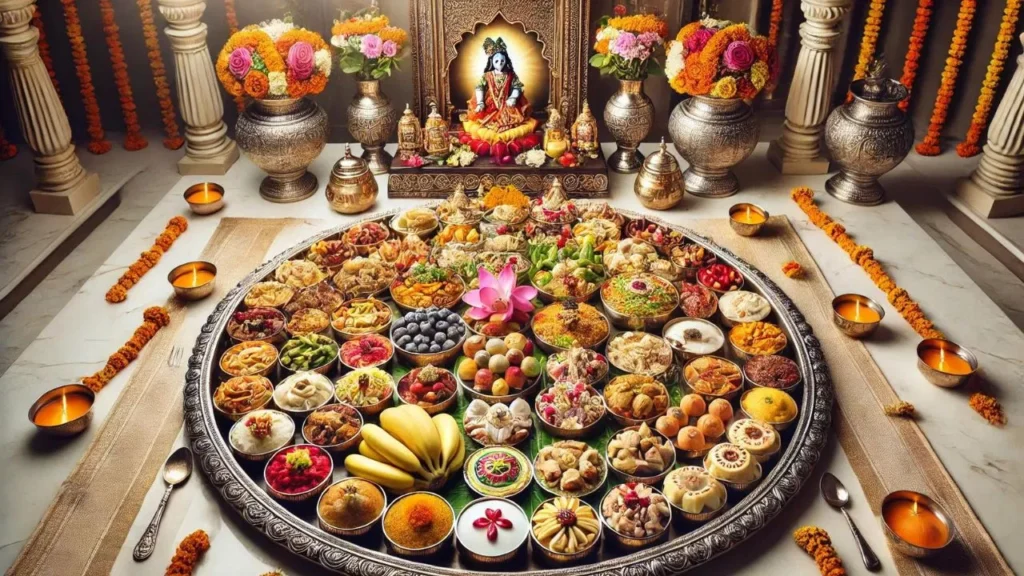
One of the most well-known and spiritually rich offerings to Krishna is Chappan Bhog, which literally means “56 items.” This tradition stems from a beautiful pastime when Lord Krishna lifted Govardhan Hill for seven days to protect the residents of Vrindavan. During that time, He did not eat. Out of love and gratitude, the villagers later offered Him 56 different dishes — eight items for each of the seven days.
While preparing all 56 items might not be practical for everyone, many devotees create a mini Chappan Bhog at home. You can include a mix of savory and sweet dishes, such as:
- Different varieties of sabzi (vegetable dishes)
- Simple rice dishes like lemon rice, sweet rice, or pulao
- Fried items like mathri, pakoras, and puri
- Curd-based dishes such as raita or lassi
Arrange them beautifully on banana leaves or silver plates and place them before your altar. It is not the quantity, but the quality of devotion that makes Krishna smile.
Sweets That Krishna Loves
It is impossible to celebrate Janmashtami without sweets, as Krishna is famously known as Makhan Chor, the butter thief, and has an eternal love for dairy-based treats. Making sweets for Janmashtami is one of the most joyful parts of the celebration, especially for children and elders alike.
Among the easiest and most beloved sweets is kheer, a rice pudding made with milk, sugar, cardamom, and dry fruits. It’s a timeless offering that holds a special place in devotional cooking. You can also make peda using khoya or milk powder, gently flavored with saffron and cardamom.
Malpua, a deep-fried pancake soaked in sugar syrup, is another traditional favorite. Coconut barfi, besan laddoos, sandesh, and dry fruit laddoos are all suitable options that are both easy to prepare and widely loved by Krishna devotees.
And of course, no offering is complete without Makhan-Mishri, a simple yet sacred combination of freshly churned butter and rock sugar, symbolizing the simplicity and sweetness of Krishna’s childhood pastimes.
Devotional Attitude While Cooking
More than the ingredients, more than the recipes — it is the intention and consciousness behind the cooking that matters most. Devotees often bathe before cooking, wear clean clothes, and avoid tasting the food until after it has been offered to the Lord. Cooking in silence or while listening to bhajans helps keep the mind focused on Krishna.
While offering, light a lamp and incense, and place the food on your home altar. Fold your hands, close your eyes, and say a simple heartfelt prayer such as:
“Dear Krishna, this food is prepared only for You. Please accept this humble offering from my heart.”
Wait a few minutes before distributing the food as prasadam — sacred food that nourishes both the body and the soul.
Final Thoughts
Janmashtami is a day of celebration — not just through decorations or rituals, but through the love we express in service. Cooking for Krishna is one of the most intimate and joyful ways to honor His presence in our lives.
Whether you make a full meal or just a single dish, whether you follow Chappan Bhog or simply offer butter and sugar, remember: Krishna accepts whatever is offered with love.
So on this Janmashtami, turn your kitchen into a temple, your ingredients into blessings, and your meal into a sacred offering.
Wishing you a sweet, peaceful, and spiritually rich Janmashtami!
Jai Shri Krishna!
